
The Businesses Winning Online in 2026 Are Doing These 5 Things
The businesses winning online in 2026 are not simply posting more, running more ads, or having a nicer-looking website. They are easier to find, easier to trust, easier to understand, and easier to contact. They use SEO, local SEO, website design, content marketing, social media, reviews, Google Business Profile optimization, paid ads, AI search optimization, and smart lead generation as one connected system.
In other words, they are not just online.
They are built to be chosen.
Table of Contents
Why Being Online Is No Longer Enough
A lot of business owners are feeling the same frustration right now.
They have a website.
They have social media.
They may have a Google Business Profile.
Maybe they tried ads. Maybe they hired someone for SEO. Maybe they post when they remember. Maybe they boosted a few Instagram posts and hoped something would happen.
But the phone is still too quiet.
The leads are inconsistent.
The website gets visitors, but not enough calls.
The Google profile gets views, but not enough bookings.
The business is active online, but somehow customers are still choosing competitors.
That is the painful part.
Because in many cases, the business itself is not the problem.
The restaurant has great food.
The clinic has skilled professionals.
The contractor does honest work.
The retail store has products people would love.
The service business actually cares about its customers.
But online, customers do not know that yet.
They only know what they can see, read, compare, and understand in a few seconds.
That is why digital presence matters more than ever in 2026.
Your website is not just a brochure anymore. Your Google profile is not just a listing. Your social media is not just a place to post pictures. Your content is not just “blog stuff.”
Together, they shape how people see your business before they ever call you.
And if your online presence feels outdated, confusing, inconsistent, or weak, customers may move on before you even know they were interested.
The businesses winning online in 2026 understand this.
They are not necessarily the biggest businesses.
They are not always the ones spending the most.
They are the ones making it easy for people to find them, trust them, and take the next step.
Thing 1: They Show Up Where Customers Are Already Searching
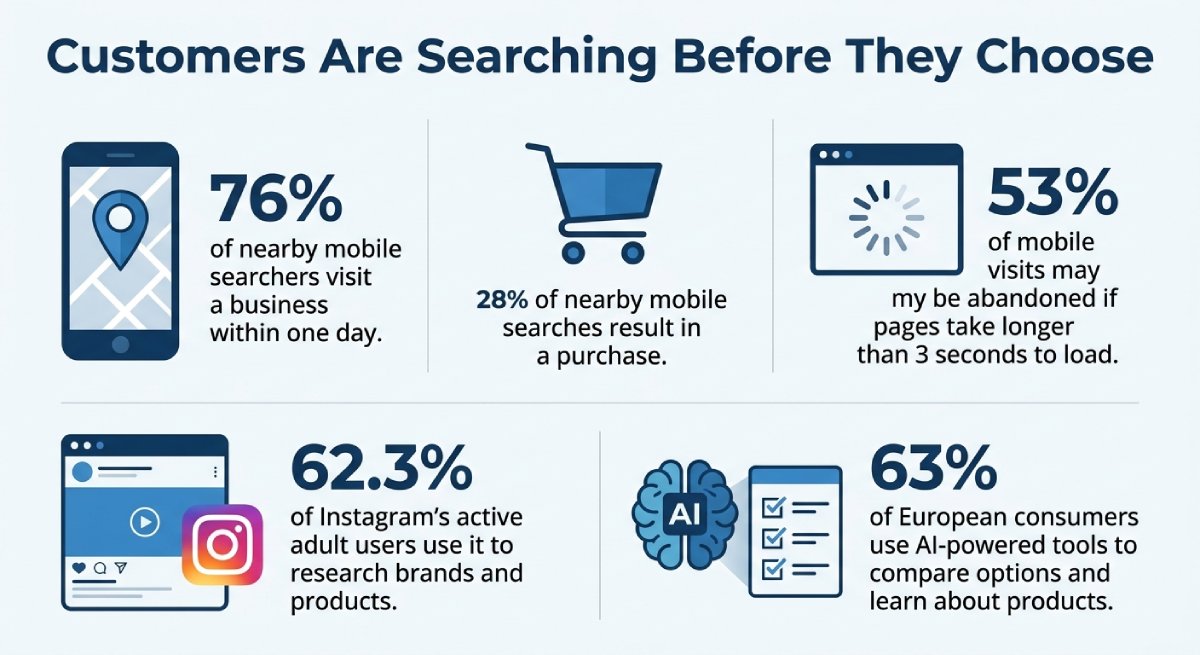
One of the biggest mistakes businesses make is thinking customers search in one place.
They do not.
A hungry customer may check Google Maps, Instagram, TikTok, menu photos, delivery apps, reviews, and “restaurants near me” searches before deciding where to eat.
Someone looking for Botox, fillers, HIFU, PRP, or skin treatments may search Google, read FAQs, compare clinic websites, look at before and after photos, check reviews, and ask very specific questions before booking.
A homeowner with a broken furnace may search “furnace repair near me,” check who is open, scan reviews, visit a few websites, and call the business that feels most reliable.
A business owner looking for marketing help may search for SEO services, web design, local SEO, paid ads, lead generation, or digital marketing agencies in Toronto before choosing who to contact.
The customer journey is no longer simple.
People jump between platforms.
They search. They compare. They leave. They come back. They ask more questions. They check reviews. They look for proof.
That means your business cannot depend on one channel.
A single website is not enough.
A few Instagram posts are not enough.
A Google profile with old photos is not enough.
One ad campaign is not enough.
Winning businesses build visibility in layers.
They work on:
SEO
Local SEO
Google Business Profile optimization
Website service pages
Helpful blog content
Reviews and reputation
Social media proof
Paid ads when needed
AI search optimization
Clear branding and messaging
This does not mean every business needs to be everywhere all the time.
It means your business needs to show up in the places your customers are already looking.
For a local business, that often starts with Google Search, Google Maps, your website, reviews, and local content.
For restaurants, clinics, contractors, retailers, and service businesses across Toronto and the GTA, local visibility can be the difference between getting the call and being invisible.
Customers are not trying to work hard to find you.
They want quick answers.
They want confidence.
They want to know, “Can this business help me?”
The businesses that answer that question clearly win more often.
Thing 2: They Turn Their Website into a Lead Generator
A website in 2026 cannot just look nice.
A beautiful website that does not bring leads is like a gorgeous storefront with the door locked.
It may look professional, but it is not doing enough work.
Winning businesses treat their website like a sales tool, a trust builder, and a lead generator.
When someone lands on your website, they should quickly understand:
What you do
Who you help
Where you serve
Why they should trust you
What makes you different
What step they should take next
If visitors have to dig for basic information, they leave.
If your phone number is hard to find, they leave.
If your service pages are vague, they leave.
If your website loads slowly on mobile, they leave.
If your content sounds generic, they may not feel enough trust to contact you.
Most people are not reading your website like a book.
They are scanning.
They are judging.
They are asking themselves:
“Does this business look professional?”
“Can they solve my problem?”
“Are they close enough?”
“Do they seem trustworthy?”
“Is this worth my time?”
That means website design is not just about colours, fonts, and images.
It is about clarity.
It is about structure.
It is about guiding people from interest to action without making them think too hard.
For a restaurant, that may mean clear menus, great food photos, location pages, online ordering, hours, reviews, and mobile-friendly navigation.
For a clinic, it may mean treatment pages, FAQs, safety information, credentials, before and after examples, pricing guidance, and easy booking options.
For contractors, it may mean service area pages, emergency service information, project photos, reviews, clear calls to action, and click-to-call buttons.
For retail and service businesses, it may mean clear categories, strong product or service descriptions, local pages, fast speed, and simple contact options.
The common mistake is building a website around what the business wants to say.
Winning businesses build websites around what the customer needs to know before saying yes.
That is a major difference.
Your website should not make people guess.
It should make the next step feel obvious.
Is Your Website Helping or Holding You Back?
If your website looks good but still does not bring enough calls, bookings, leads, or sales, the problem may not be your business. It may be the way your website is structured.
If your website is online but not working hard enough, it may be time to take a closer look.
Thing 3: They Build Trust Before the First Call
People are more careful now.
They compare businesses before contacting them.
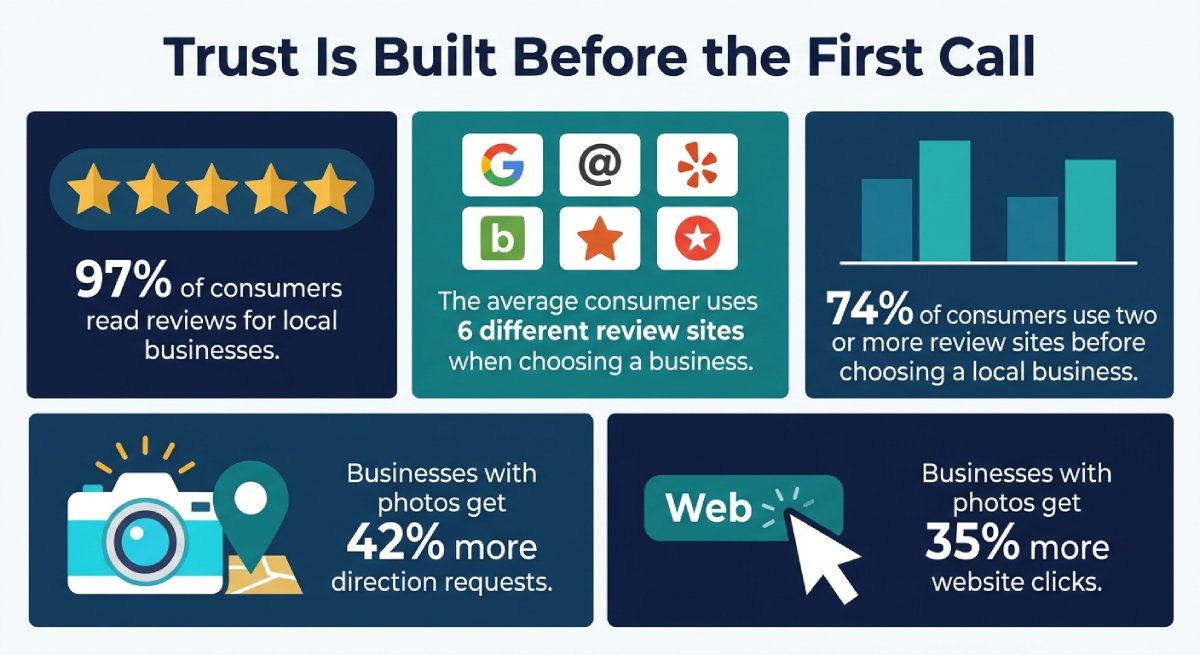
They read reviews.
They check photos.
They look at social media.
They scan the website.
They notice if information is outdated.
They look for proof that the business is real, active, and reliable.
This is especially important in industries where trust matters.
A homeowner does not want to hire the wrong contractor.
A patient does not want to choose the wrong clinic.
A customer does not want to waste money at a restaurant that looks questionable online.
A business owner does not want to hire a marketing company that sounds good but cannot show clarity, strategy, or results.
Trust is not built by saying, “We are the best.”
Everyone says that.
Trust is built with proof.
Winning businesses show proof in many places.
They use real reviews.
They update their Google Business Profile.
They add recent photos.
They explain their services clearly.
They answer common questions.
They show examples of their work.
They keep their branding consistent.
They respond professionally.
They make contacting them easy.
Consistency matters.
If your website says one thing, your Google profile says another, your social media has not been updated in months, and your reviews are buried, customers feel uncertainty.
And uncertainty kills leads.
This does not mean your business needs to look perfect.
Actually, real businesses feel more trustworthy when they look active, honest, and human.
A strong recent review can help.
A helpful FAQ can help.
A clear service page can help.
A professional photo can help.
A quick response to a review can help.
A simple booking button can help.
Trust is not one big thing.
It is a collection of small signals that tell the customer, “This business is safe to choose.”
The businesses winning online understand that people often decide before they ever speak to you.
So, they build trust before the first call.
Thing 4: They Create Content That Answers Real Customer Questions
Many businesses misunderstand content marketing.
They think it means writing random blog posts because someone told them, “You need SEO content.”
That is not the goal.
Winning businesses do not create content just to fill space.
They create content that answers the questions customers are already asking.
That is where SEO, AI search optimization, and lead generation connect.
For example, a restaurant can answer:
“What should I order if I have never tried Vietnamese food?”
“What is the difference between pho and ramen?”
“Where can I find family-friendly restaurants near me?”
A clinic can answer:
“How long do fillers last?”
“What is the difference between Botox and fillers?”
“Is HIFU good for sagging skin?”
“What should I know before my first treatment?”
A contractor can answer:
“Why is my furnace blowing cold air?”
“How do I know if my roof needs repair?”
“How much does emergency plumbing cost?”
“When should I replace my AC unit?”
A service business can answer:
“What should I expect from my first appointment?”
“How do I choose the right provider?”
“What questions should I ask before booking?”
These are not just keywords.
They are buying signals.
When someone asks a detailed question, they are often closer to making a decision.
They may not be ready to buy this second, but they are looking for guidance.
If your business provides the clearest, most helpful answer, you build trust early.
That is how content brings value.
Not by stuffing keywords.
Not by writing long pages that say nothing.
Not by copying what every competitor is doing.
Good content should be clear, useful, local when needed, and easy to scan.
It should answer the real question quickly, then explain enough to make the reader feel informed.
This matters even more because search is changing.
People are using Google differently.
They are asking longer questions.
They are using voice search.
They are reading AI-generated summaries.
They are comparing businesses before clicking.
AI search systems need clear information to understand what your business does, who you help, where you serve, and why your content is useful.
That is why AI search optimization is not separate from SEO.
It builds on good SEO.
Clear headings, helpful answers, strong service pages, local relevance, FAQs, trust signals, and structured content all help your business become easier to understand.
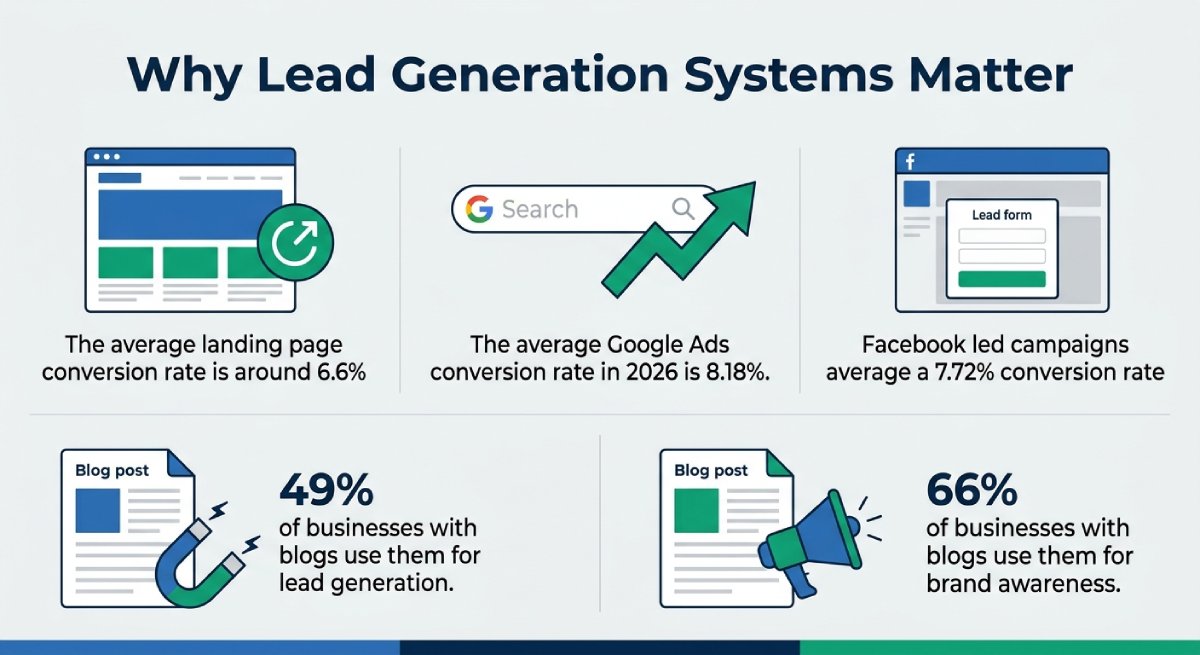
You are not just writing for Google.
You are writing for the real person behind the search.
And that person is asking, “Can this business help me?”
Your content should answer yes without sounding desperate.
Thing 5: They Track, Improve, and Stop Guessing
A lot of businesses are making marketing decisions based on feelings.
They say things like:
“I think Instagram is working.”
“I do not know if our ads helped.”
“We get website traffic, but I am not sure if it turns into leads.”
“We post all the time, but nothing really happens.”
“Our competitors keep showing up, and I do not know why.”
This is common.
But it is also dangerous.
Because if you do not know what is working, you may keep spending money in the wrong place.
You may keep posting content that does not move people closer to buying.
You may keep running ads to a weak landing page.
You may ignore a service page that could bring better leads.
You may assume SEO is not working when the real issue is your website structure, reviews, call tracking, or follow-up process.
Winning businesses track the numbers that matter.
Not vanity numbers.
Real business numbers.
They look at:
Website visits
Top-performing pages
Local search visibility
Google Business Profile calls
Form submissions
Booking clicks
Ad performance
Search terms
Page drop-offs
Service area performance
Review growth
Lead quality
You do not need to become a data expert.
But you do need to know what is happening.
For example, a contractor may discover that a specific service page brings better leads than the homepage.
A clinic may realize people are reading treatment pages but not booking because the next step is unclear.
A restaurant may get lots of Google profile views but not enough calls because the menu, photos, or hours are not optimized.
A service business may find that paid ads are getting clicks, but the landing page does not answer the customer’s most important question.
That is why tracking matters.
It shows you where the leak is.
Marketing should not feel like throwing money into the air and hoping something lands.
A strong digital strategy helps you see what is working, what needs fixing, and what should happen next.
The businesses winning online in 2026 do not guess forever.
They measure.
They improve.
They adjust.
That is how small improvements turn into better visibility, better leads, and better sales over time.
-
Is Your Google Business Profile Quietly Hurting Your Visibility?
-
Your Competitors May Be Winning Simply Because They Respond Faster
-
Your Website Might Look Fine to You, But Confusing to Customers
-
Your Google Ads Budget Might Be Disappearing Without Bringing Real Customers
The Mistakes Keeping Good Businesses Invisible
Good businesses can still lose online.
Not because they are not talented.
Not because their service is bad.
But because their online presence does not show their value clearly enough.
Here are the mistakes we see often.
Mistake 1: Treating the Website Like a One-Time Project
A website is not something you build once and forget for five years.
Your services change.
Your customers change.
Search behaviour changes.
Competitors improve.
If your website has old content, slow pages, weak service descriptions, poor mobile design, or unclear calls to action, it may be quietly costing you leads.
Mistake 2: Ignoring Local SEO
For restaurants, clinics, contractors, retailers, and service businesses, local SEO is huge.
People search with location in mind.
They search:
“Near me”
“in Toronto”
“in Mississauga”
“in Vaughan”
“best clinic in North York”
“contractor in Richmond Hill”
“restaurant near me open now”
If your website, Google Business Profile, reviews, photos, service pages, and location signals are weak, competitors can show up before you even if your business is better.
Mistake 3: Posting Without a Strategy
Posting every day does not automatically create leads.
Content needs a purpose.
Some content should educate.
Some should build trust.
Some should answer objections.
Some should show proof.
Some should show personality.
Some should guide people to the next step.
Random posting creates random results.
A strong social media strategy connects your content to your business goals.
Mistake 4: Depending Only on Paid Ads
Paid ads can work very well.
But ads cannot fix everything.
If your website is confusing, your reviews are weak, your offer is unclear, or your follow-up is slow, paid traffic can become expensive waste.
The full path matters.
Ad.
Landing page.
Message.
Trust proof.
Call to action.
Follow-up.
When the full system works, ads have a better chance of turning into real leads.
Mistake 5: Ignoring AI Search
AI search does not mean SEO is dead.
It means clarity matters more.
Businesses need helpful, structured, trustworthy content that answers real questions.
If your website is vague, thin, outdated, or hard to understand, both people and search systems may struggle to see why your business should be recommended.
AI search optimization is about making your expertise easier to understand, organize, and trust.
What This Means for Toronto and GTA Businesses
Toronto is competitive.
So are Mississauga, Vaughan, Markham, Richmond Hill, North York, Scarborough, Etobicoke, Brampton, Oakville, Burlington, Pickering, Ajax, Whitby, and the rest of the GTA.
Customers have options.
A lot of them.
That means your online presence has to work harder.
It has to explain your value quickly.
It has to build trust fast.
It has to show that you are active, reliable, and worth contacting.
This is especially important for businesses that rely on calls, bookings, appointments, walk-ins, quote requests, or local customers.
Restaurants need to show up when people are hungry.
Clinics need to build trust before someone books.
Contractors need to appear when something breaks.
Retailers need to give people a reason to visit or buy.
Service businesses need to prove reliability before the first conversation.
The businesses winning online in 2026 are not waiting for customers to figure it out.
They are making the decision easier.
That is the real advantage.
Want to See What Your Business Is Missing Online?
Sometimes the problem is not your service, your product, or your team. It is the way customers experience your business online before they ever contact you.
Unlimited Exposure Online helps Toronto and GTA businesses find the gaps, improve their digital presence, and create a clearer path from search to trust to real customer action.
Ready to see where your online presence can improve? Contact Us today.
FAQs
Why is my business online but still not getting enough leads?
Your business may be online, but that does not mean your digital presence is working as a lead generation system. If your website is unclear, your Google Business Profile is weak, your reviews are limited, your local SEO is poor, or your content does not answer real customer questions, people may find competitors first. Leads usually come from a connected system that includes visibility, trust, website structure, clear messaging, and strong follow-up.
What does a business need online to win in 2026?
A business needs a fast, clear website, strong local SEO, an optimized Google Business Profile, helpful content, consistent branding, real reviews, and easy ways for customers to contact or book. Depending on the business, social media marketing, paid ads, marketing automation, and AI search optimization can also help. The most important thing is that all of these piece’s work together instead of feeling disconnected.
Is SEO still important with AI search becoming more popular?
Yes. SEO is still important, but it has changed. Businesses now need content that is clear, helpful, structured, and written in natural language. AI search tools often rely on information that is easy to understand, trustworthy, and relevant to the user’s question. Strong SEO, local SEO, website structure, service pages, FAQs, reviews, and authority signals can all help your business become easier for both people and AI systems to understand.
How can a local business show up higher on Google?
A local business can improve visibility by optimizing its Google Business Profile, collecting real reviews, adding accurate services and locations, improving website service pages, using local keywords naturally, publishing helpful content, and keeping business information consistent across the web. Local SEO works best when your website, reviews, photos, services, location pages, and Google profile all support each other.
Do small businesses need paid ads to get more customers?
Not always. Paid ads can help bring traffic and leads faster, but they work best when the rest of your digital presence is strong. If your website is confusing, your reviews are weak, or your offer is unclear, ads may waste money. Many small businesses benefit from a mix of SEO, local SEO, content marketing, Google Business Profile optimization, and selective paid ads when there is a clear strategy.
Why are competitors getting more calls even if we offer better service?
Competitors may be easier to find, easier to trust, or easier to understand online. Customers usually make decisions based on what they can see before contacting you. If another business has stronger reviews, clearer service pages, better local SEO, better photos, stronger social proof, or a smoother website experience, they may get the call first even if your service is better.
How often should a business update its website and online presence?
A business should review its website, Google Business Profile, reviews, service pages, photos, FAQs, and calls to action regularly. For competitive industries, monthly updates can help keep content fresh and useful. At minimum, businesses should review their main digital assets every quarter to make sure the information is accurate, the website is working properly, and the content still reflects what customers need to know.
Final Thoughts
The businesses winning online in 2026 are not always the biggest.
They are not always the loudest.
They are not always the ones with the largest ad budget.
They are usually the ones that understand how customers actually search, compare, trust, and choose.
They know a website alone is not enough.
They know random social media posts are not enough.
They know paid ads without strategy can waste money.
They know good marketing is not about doing one thing.
It is about building a digital presence that works like a system.
People need to find you.
They need to understand you.
They need to trust you.
They need to know what to do next.
And they need all of that to happen quickly, especially on mobile.
If your business is online but still not getting enough visibility, calls, bookings, leads, or sales, the problem is not hopeless.
It usually means the system needs to be cleaned up, strengthened, and built around real customer behaviour.
That is where the opportunity is.
About Unlimited Exposure Online
Unlimited Exposure Online is a Toronto-based digital marketing and web development agency helping businesses across the GTA build stronger visibility, better websites, and smarter digital marketing systems.
We work with restaurants, clinics, contractors, retailers, service businesses, and growing companies that want more than random posts, confusing reports, or one-time marketing efforts.
Our services include SEO, local SEO, website design and development, content marketing, social media marketing, Google Business Profile optimization, paid ads, lead generation, branding, reputation management, marketing automation, and AI search optimization.
If your business is online but still not getting the attention, trust, leads, calls, bookings, or sales it deserves, your strategy may need a closer look.
Unlimited Exposure Online can help you turn your digital presence into something clearer, stronger, and easier for customers to choose.
