
Basic Digital Marketing

Today’s customers don’t like waiting. If they don’t get an answer quickly, they simply move on to the next business. Whether you run a clinic, an online store, a service business, a restaurant, or a local company, the questions are always the same: How much does it cost? Do you have availability? Where are you located? How do I book?
That’s where chatbots stop being a “nice-to-have” and become a real business tool.
A chatbot is not just a chat bubble on your website. When set up properly, it can answer questions 24/7, book appointments, capture leads, reduce missed calls, and guide customers to the right service or page-automatically. Even better, the same chatbot can work across your website, Instagram, and Google, meeting customers exactly where they already are.

If you’ve ever thought about adding a chatbot to your restaurant but stopped because it sounded complicated, expensive, or time-consuming, you’re not alone. One of the first questions restaurant owners ask is simple and very practical: “How long does it actually take to install a restaurant chatbot?” The honest answer is usually much faster than people expect.
Today’s restaurant chatbots are not giant tech projects. They’re lightweight tools designed to answer real customer questions like menu details, hours, allergies, delivery options, and directions without tying up your staff or phone lines. In many cases, a basic chatbot can be live the same day, while more advanced setups still launch in just a few days, not weeks or months.
This guide breaks down the real installation timeline step by step, explains what affects how fast your chatbot can go live, and shows what Toronto and GTA restaurants can realistically expect. No tech jargon, no hype just a clear look at how restaurant chatbots are planned, built, tested, and launched so you can decide if and when it makes sense for your business.

Whether you’re in Toronto, Mississauga, Scarborough, or Vaughan, the question comes up every January: Should we increase our SEO budget this year or put more into Google Ads?
The challenge is that the answer is no longer binary. In 2026, search behaviour, ad competition, and AI-driven results (Google AI Overview, Bing Deep Search, and ChatGPT Search) have changed how people discover businesses. SEO brings long-term stability and brand authority. Google Ads bring instant reach and predictable lead flow.

Let’s be honest - running a restaurant in Toronto, North York, Etobicoke, or Mississauga means juggling nonstop questions from customers before they ever walk through your door. You’re answering DMs, phone calls, Google Messages, Instagram replies, and website inquiries - usually the same eight questions every single day.
And here’s the truth most restaurant owners won’t say out loud:
You don’t need more customers. You need fewer interruptions. (You know what I mean)

Millions of businesses post every day, but only a small number actually get real customers from social media. The rest are stuck doing the same thing: posting random content, hoping something “goes viral,” checking likes, and wondering why nothing turns into money.
If this sounds familiar, you’re not alone. Social media is crowded, confusing, always changing, and honestly most business owners were never taught how to turn attention into actual revenue.
Here’s the simple truth:
Likes don’t pay your bills. Clients do.
This article shows you exactly how social media becomes a real lead system even if you don’t have a big audience, a big budget, or fancy content.
It's all explained in plain English. No fluff, no jargon just clear steps any business owner can immediately understand and use.

If you run a business in Toronto, Mississauga, Scarborough, or North York, there’s a good chance your customer information is all over the place in emails, texts, spreadsheets, notebooks, or even in someone’s head.
A CRM (Customer Relationship Management system) puts all your leads and customers in one simple place.
It reminds you who to call, who’s waiting for a quote, and who’s ready to book.
Without a CRM, most businesses lose leads simply because no one followed up in time.

Let’s be brutally honest:
Most local businesses obsess over pages, keywords, and blogs, but completely ignore the thing customers actually look at first your photos.
Google knows it. ChatGPT knows it. AI search knows it.
Your customers? They’re deciding in two seconds based on the images they see on Google Business Profile, Apple Maps, Bing Places, Instagram, and even your website gallery.
Here’s the truth no one talks about:
-
Photos now act like mini landing pages.
-
AI can “read” what’s in your images.
-
Local SEO rankings shift depending on the consistency, freshness, and context of your visuals.
In 2025, AI doesn’t just see a “photo.”
It sees: your storefront, your neighborhood, your staff uniforms, the menu on the wall, the tools you’re holding, your service process, and even the weather outside.
This article shows you exactly how to make your photos rank, not just your pages using image types, geocues, EXIF basics, and posting cadence that Google’s AI actually rewards.

Local SEO isn’t what it used to be. We’ve officially entered the zero-click era where Google AI Overviews, SearchGPT, Bing Deep Answers, and voice assistants answer a customer’s question before they ever click a website.
If your business isn’t showing up in those answers, you’re invisible. Period.
Why is “Zero-Click” Search the New Local Battleground?
AI Overviews now dominate the top of the page. Customers get what they need instantly: hours, pricing, services, locations all without leaving Google.
The primary goal of 2025 Local SEO is to become the trusted, quotable source that fuels Google’s AI Overviews and Maps snippets, turning “zero-click” into “zero-friction” conversion.

While most small businesses are still boosting posts on Meta and complaining about rising costs, TikTok is turning into a quiet CPL killer.
Same audience types. Same budget sizes. Completely different results.
Why? Because TikTok’s “For You” Page (FYP) doesn’t care how big your brand is. It cares how people react to each piece of content in real time. If you understand that behavior loop, you can drive 50% cheaper leads just by speaking TikTok’s language.
This isn’t about dancing. It’s about feeding the algorithm the right signals.

You hit “Boost Post” because Meta makes it easy.
You see reach. Hearts. Comments. “Good engagement.”
But then you look at your calendar and your inbox and think:
“Where are the leads? Where are the bookings?”
Boosting is built to buy attention, not action. This guide shows you, in plain English, how to switch from random boosts to three simple Meta ad funnels that get you real leads, appointments, and sales-without needing to be a media buyer.

Sometimes your best campaign is a laugh people can’t walk past.
That’s the whole play. Not big budgets. Not fancy ads. One human moment that makes strangers stop, raise a phone, and share. Think chalkboard one-liners, mirror stickers, tiny “photo-worthy” scenes. If it passes the Stop, Snap, share test, you get free reach and real foot traffic-today, not “someday.” This guide shows simple, $0 tactics any café, clinic, shop, or service can copy in 24 hours. Plain English. No fluff. Let’s make people stop-and let them do your marketing for you.

Most chatbots are charming, and completely useless. They greet, they banter, they share links-and then the buyer disappears. The new standard is simple: if your bot can’t create a booked call or appointment in 60–90 seconds, it’s costing you money. This article shows you how to turn any polite “helper” into a booking bot that qualifies, routes, and schedules-without adding headcount.
A booking bot answers in one breath (30–80 words), detects intent (service + timing), and moves the visitor to a live calendar in 60–90 seconds. It collects only essentials (name, contact, service, time), confirms by email/SMS, and offers human handoff. Expect +15–30% chat-to-lead lift in 2–4 weeks when you replace small talk with this flow.

To rank service pages in Google's AI Overviews, you must structure them as direct answer hubs. Use clear, concise language to define the service, provide step-by-step instructions, and include verifiable proof of results. Optimize for conversational and question-based search queries to capture voice and AI-driven traffic.

In local search, there’s no trophy for “almost.” You either show up when someone in Toronto searches “near me,” or you don’t. The good news: a handful of focused changes-done in the right order-can shift visibility within 14 days. This playbook is written for Toronto/GTA SMBs (clinics, restaurants, trades, services) who want measurable movement fast: more map impressions, more profile views, more calls/directions, and more qualified site clicks.
Quick takeaway: Following this article will make your Google Business Profile (GBP) quotable for AI/voice, align your NAP citations, spark review velocity, publish hyper-local pages, and wire schema + internal links so Google understands exactly who you are, where you are, and why you deserve to rank.

Your customers aren’t “browsing” like it’s 2019 they’re asking. Into chatbots, voice assistants, and AI search. If your page doesn’t deliver a clean, quotable answer in under eight seconds, you’re invisible. This playbook shows Toronto SMBs, clinics, and restaurants how to make pages AI-ready: short, structured, and backed by proof so AI can lift your answer verbatim and send buyers straight to Book or Call.
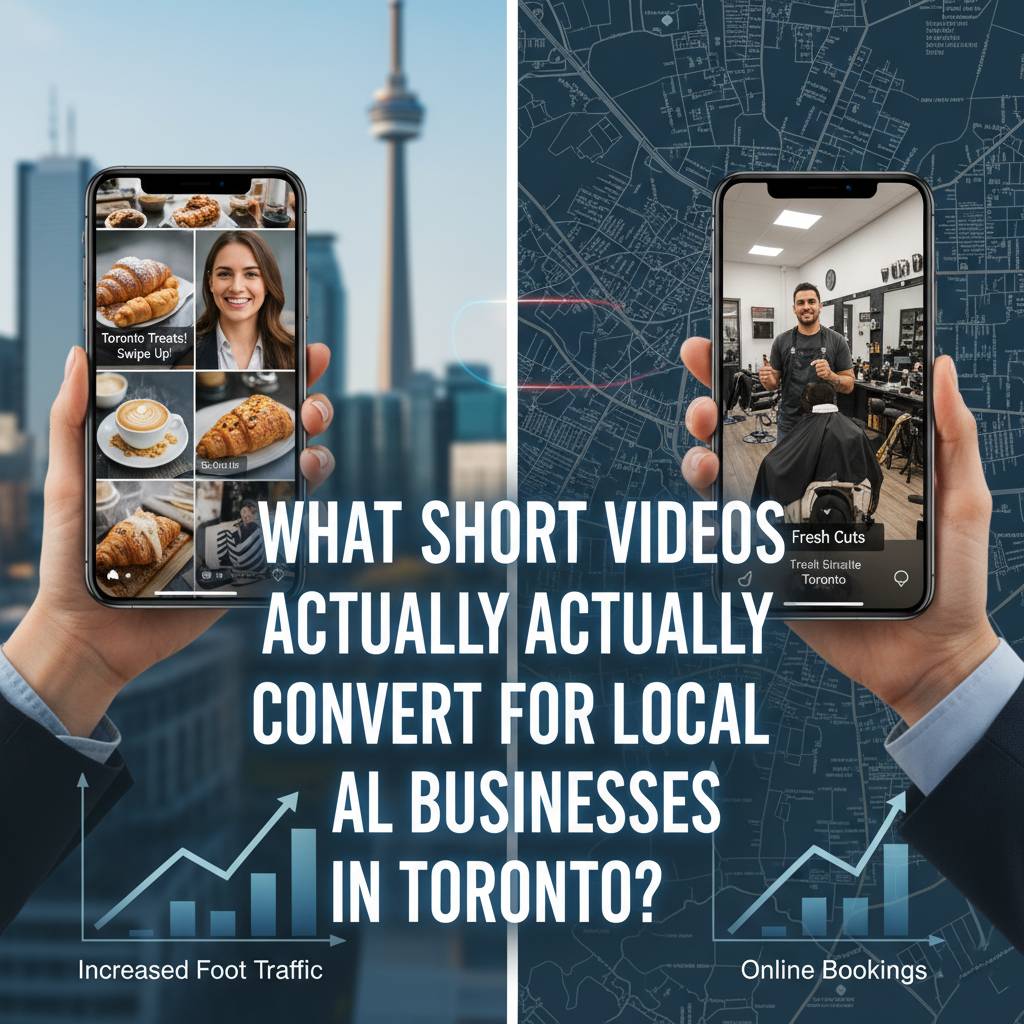
Toronto’s not short on content - it’s short on attention.
Every scroll on Instagram or TikTok is a mini war for eyeballs, and your competition isn’t just other local businesses - it’s Drake’s latest drop, a raccoon video from Etobicoke, and someone complaining about TTC delays again.
But here’s the real talk: most short videos flop not because the idea was bad or the camera wasn’t fancy enough. They flop because they don’t connect. Toronto audiences are sharp - they can spot fake enthusiasm and stock-footage vibes from a mile away.
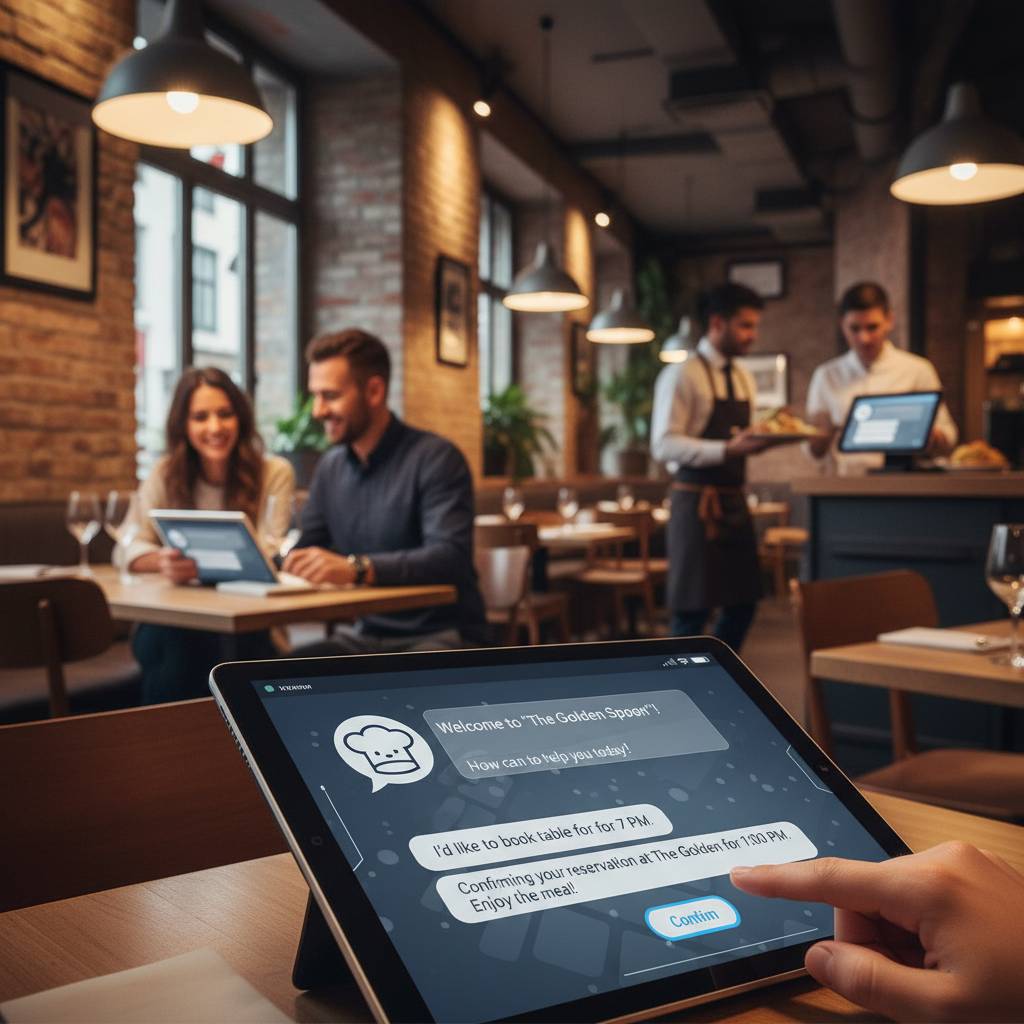
Restaurant chatbots handle orders, reservations, and FAQs 24/7-reducing phone load, cutting errors, and lifting revenue with smart upsells. The best results come when the bot connects to your POS/CRM, syncs the menu in real time, and routes complex requests to staff. Start small, measure, and expand what works.

Most small businesses should start with WordPress for cost, flexibility, and SEO. Choose headless when you need top-tier speed, multi-channel content, or app-level features. Go custom when your workflows, security, or integrations are unique. Match the platform to traffic goals, content cadence, in-house skills, and maintenance budget.

Aim for under 2 seconds total load on key pages, with ~1.3–1.8 seconds as a healthy goal. Faster pages keep visitors, earn trust, and convert more especially on mobile across Toronto and the GTA. If you’re over 3 seconds, you’re likely losing calls and form fills you should be winning.

Rank in “near me” by choosing the right primary category, adding Services, keeping your name-address-phone identical everywhere, and posting helpful updates weekly. Point your GBP to a fast, matching landing page. Earn reviews that mention the service and Toronto areas (e.g., North York). Track with UTMs so you double down on what works.
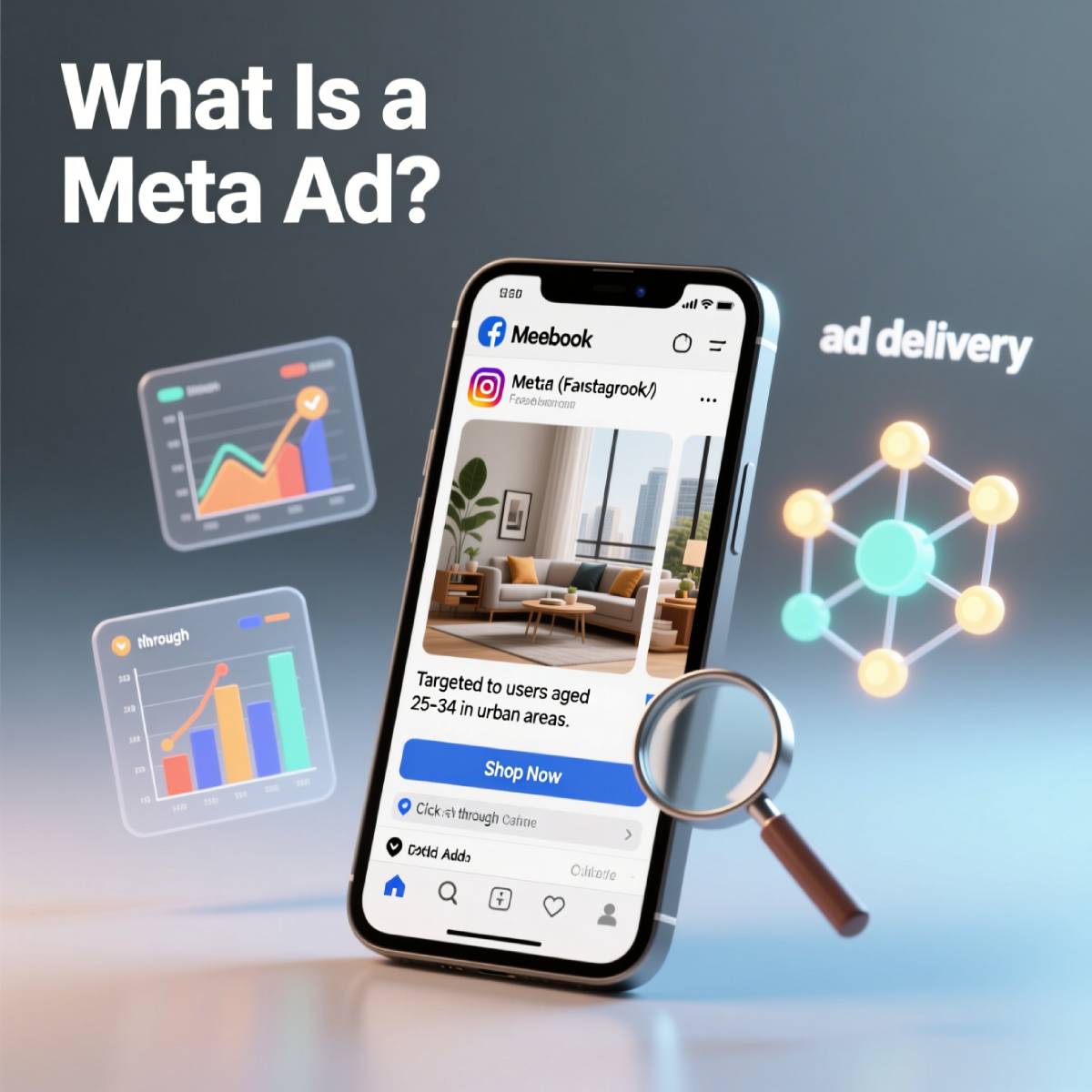
In today’s fast-paced digital world, businesses in Toronto and across the GTA can’t afford to rely on guesswork when it comes to online advertising. With millions of daily users scrolling, liking, and engaging across Facebook, Instagram, and Messenger, Meta Ads have become one of the most powerful tools for connecting brands with real people. But what exactly are Meta Ads, and how can they help your business stand out in a crowded market?
This complete guide breaks down everything you need to know—from how Meta Ads work and where they appear, to advanced targeting, creative formats, and strategies that actually drive results. Whether you’re a small local business in Scarborough or a growing company in Mississauga, this guide will show you how to use Meta Ads to increase visibility, attract high-intent customers, and grow your revenue efficiently.

Voice search has shifted from being a futuristic novelty to an everyday behavior. With the widespread adoption of Google Assistant, Amazon Alexa, Apple Siri, and Microsoft Cortana, billions of voice queries are processed daily. ComScore once predicted that 50% of all searches would be voice-based by 2020, and while typed queries still dominate, the rise of smart speakers and mobile voice assistants confirms that spoken queries are no longer optional for businesses optimizing for SEO.
The unique challenge of voice search is that it typically returns only one answer-unlike typed queries, where a user can scroll through 10+ search results. That single answer is usually pulled directly from Google’s Featured Snippets, also known as position zero.
If you want to dominate voice search, mastering featured snippets isn’t optional-it’s mandatory.

Clients judge credibility, speed, and trust within seconds. In 2025, a high-performing law firm website does far more than look professional; it guides prospects to clarity, qualifies matters quickly, and hands off intelligently to your team. Below are the five essential principles that drive measurable business outcomes for modern firms, including a dedicated look at how agentic chatbots turn passive pages into active intake engines.

For years, Google Maps was the go-to place for “near me” searches. From finding a coffee shop to locating a plumber, local businesses depended on map clicks. But the landscape is shifting fast. AI-powered engines like ChatGPT, Perplexity, and Google AI Overviews are replacing traditional search behaviours.
Instead of scrolling through ten map pins, users now ask, “What’s the best Italian restaurant near me?” and get an AI-curated answer. This change is not just convenient, it’s a revolution. And local businesses that fail to adapt risk being invisible in the new era of Answer Engine Optimization (AEO).

Let’s be honest: nothing feels more deflating than seeing your blog traffic chart spike up like a stock market win… only to check your sales report and see flatlined revenue. It’s like throwing a sold-out concert where nobody buys a single T-shirt at the merch table. People show up, they clap, they leave, and you’re left holding the bill.
Here’s the elephant in the room: traffic doesn’t equal money. Traffic is attention. Conversions are what pay the bills. If your blog is getting readers but no buyers, you don’t have a “visibility” problem-you’ve got a “conversion” problem.
